Neil Gordon

How do I design an Exterior Shade Control system part I?

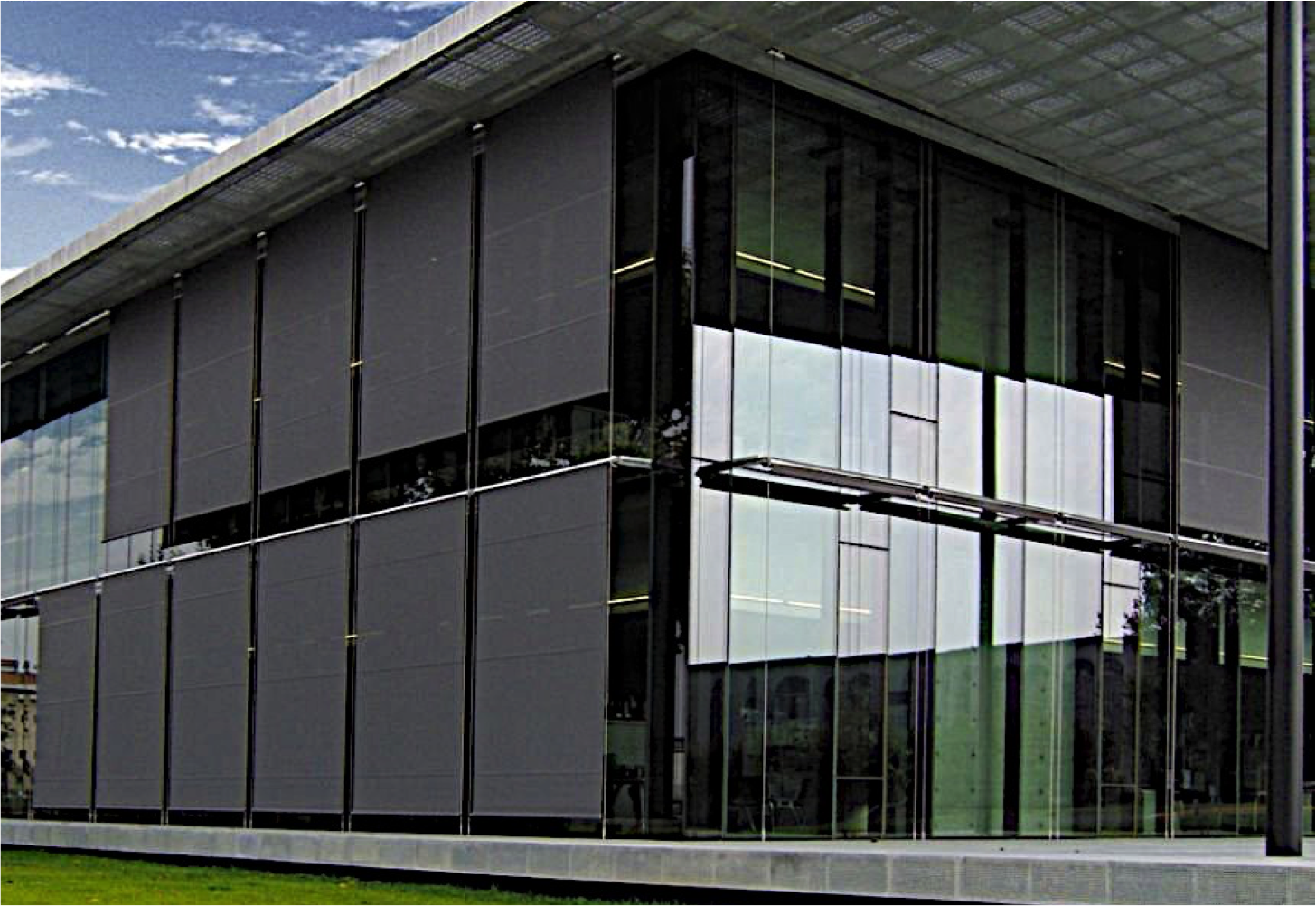
As you have read so far, exterior motorized shades provide the ultimate solution where heat and glare control are needed while preserving the view. Many European countries are now mandating exterior shading on all new building projects.  The US is rapidly embracing this concept and exterior solar shading will become a commonplace solution set for most architects and designers.

The challenge of selecting a control system design is often hampered by a lack of knowledge and manufacturers who do not fully understand the limitations of the equipment they are proposing.  There is a fundamental difference between the actual equipment selected and how it is configured and laid out.  In short, the equipment is not the control system.  It is just one element in the overall design.  Use the following checklist as an aid to smarter exterior shading designs. Engineered shading consultants should be an essential part in the overall design process and will add value to the finished project. 
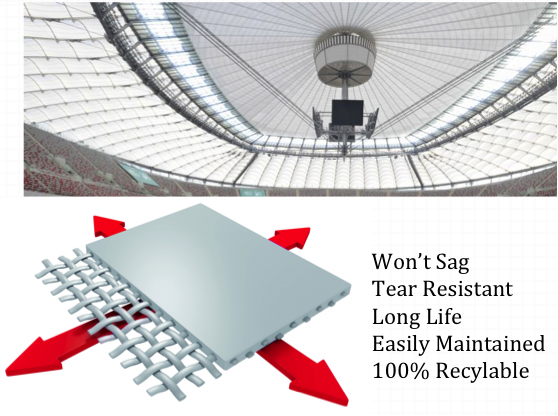
Fabrics & Finishes available for Exterior Shades

Exterior Shading Solutions require fabrics that can withstand the elements as well as for certain applications, perform under constant tension.  The best fabrics for Exterior Shading Solution are from Serge Ferrari. Their fabric uses the technology they call Precontraint. It is a high-tenacity polyester micro-yarn base cloth coating of the warp and weft threads under a high performance polymer surface layer. This technique provides exceptional dimensional stability, long tern strength and exceptional flatness. The Serge Ferrari fabrics can be seen on the London Olympic Stadium roof as well as many other prestigious projects worldwide.Exterior Shade Fabrics

Why should you choose Exterior Window Shades for your next project?


Exterior Solar Shades are in their infancy in the United States. Architects are now being introduced to the innovative European systems that provide superior performance for the reduction of solar heat gain, glare control and elegant design. All across the European continent (including northern climates) exterior shades, blinds and shutters are seen on the most sustainable buildings. This Architect’s Guide to Exterior Shading Solutions provides the reader with a complete understanding of why one should consider an exterior shade in the first place, as well as seeing the range of possible solutions, choosing the correct fabric, checking out what’s required for controls and sensors, an installation overview, how to maintain the diverse systems and where Exterior Shading Solutions fits into Sustainable Architecture.

Exterior Solar Shade

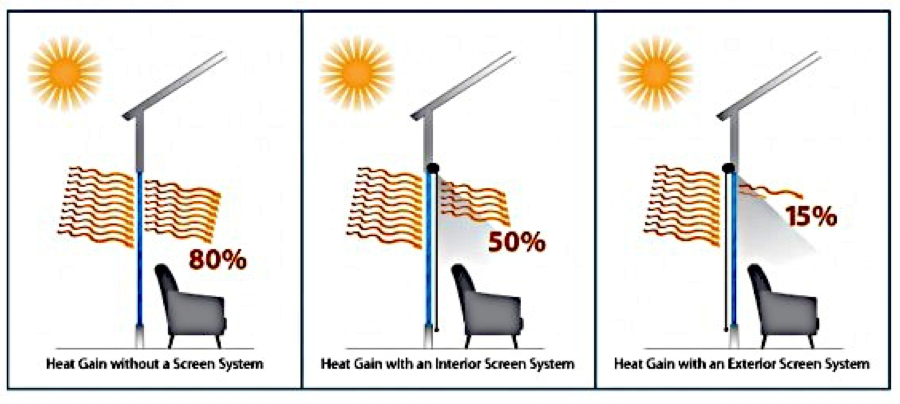
The main reason Exterior Shading Solutions are gaining popularity is because of its superior performance in reducing solar heat gain. The graphic below tells it all. A space with no shades allows 80% solar heat gain to enter a space. An Interior Shading Solution offers better results blocking over 50% of the solar heat gain. However, for maximum results nothing beats an Exterior Shading Solution, which blocks over 85% of solar heat gain.
Exterior Solar Shade

A Buyer’s Guide to Exterior Shading Solutions


Screen_Shot_2015-07-21_at_9.32.27_AM-1Exterior Window Shades are at least three times more effective at reducing solar heat gain then interior shades. That is why all across Europe in both northern and southern climates, we see Architects specifying and installing Exterior Shading Solutions for residential and commercial projects.

The Passive House & Exterior Solar Shades

 
The news about Cornell Tech on Roosevelt Island in New York City has been very exciting to those who follow Passive House trends. Handel Architects have designed the tallest Passive House building in the world. This high-rise dormitory building with its energy efficiency will change the way buildings are constructed though out the USA. 

Closer to my neck of the woods in Ramsey, New Jersey is a smaller but still significant project of a Passive House being built by Darren Macri. Darren is a local builder specializing in Passive House technology and systems. We discussed a few things about the Passive House concepts and how Exterior Solar Shades are a part of the solution to energy efficiencies.Exterior Solar Shades

Q: Where did the concept of Passive Homes come from?
A: Going back thousands of years native people have known the benefits of the low winter sun and heating their south facing homes. The Sinagua people of Arizona would only build in caves that face south but had long over hangs to block the high summer sun – the first exterior shading device!!! Ideas of making our modern homes more efficient and more comfortable actually began in the 1970’s in North America. But when oil prices dropped in 1985 the efficient home movement in North America died. In Germany a physicist named Dr. Wolfgang Feist put together the best ideas that we left behind. He reworked those ideas to create one cohesive approach and then as Germans like to do – he put metrics to it and built a home energy modeling software. Now it was predictable and measurable. He wanted to find the sweet spot of where you can make the house more efficient enough to eliminate the large central HVAC units. Then you can take that saving and put it towards the windows and insulation. He built the first Passive House in Darmstadt Germany in 1999. 

Italian Exterior Window Shade Manufacturer Expands into the USA


Just north of the magical city of Venice is the town of Treviso. Treviso is a charming place of meandering waterways and canals and the home of the clothing empire Benetton. It is also the home of Model System Italia (MSI).
MSI is a multi-generational family business, founded in 1964. The company’s first product back then was the Venetian Blind. Today MSI is an exterior window shade manufacturer.  

Put a ZIP on it…


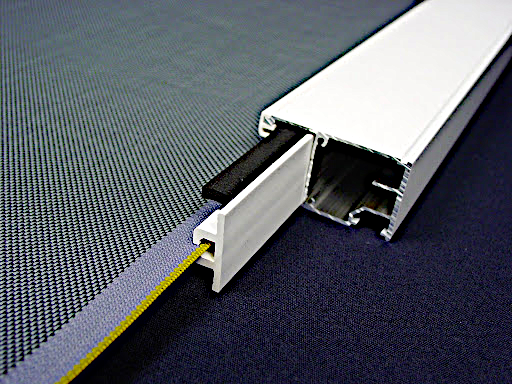
The InSync Zip Shade is a breakthrough design that is revolutionizing the window shade industry. We call it a Zip Shade because a zipper-like locking device is welded to the fabric edges. The zipper slips into a side channel that keeps the fabric from falling out. The bottom hem-bar is weighted so when the shade is completely closed the fabric provides a drum like cover to the window. 
ZIP Shade

Cable Guided Exterior Solar Shades

Cable Guided Exterior Window Shades
at the new
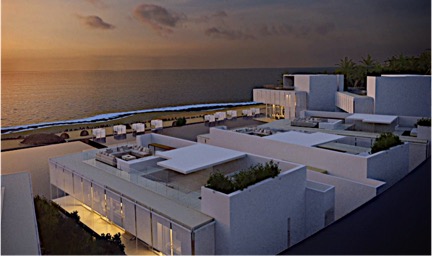
MAR ADRENTRO HOTEL LOS CABOS, MEXICO

Created with the vision and creativity of Miguel Angel Aragones, this unique tourist destination features an 83-suite five-star hotel, as well as 106 private residences and 18 estates. This one-of-a-kind architectural complex is located in San Jose del Cabo, an enclave formed by desert and sea.Exterior Solar Shades

Model System Italia’s cable guided exterior solar shades are featured throughout the project. These exterior shades are the FM41 style exterior solar shade and provide protection from the intense tropical sun. Over 85% of solar heat gain is prevented from entering.

An Exterior Shading Control Design Tutorial

Exterior motorized shades provide the ultimate solution where heat and glare control are needed while preserving the view of the outside world.  Europe has a long history of using exterior solar shades to reduce operating costs for owners while enhancing tenant comfort. Many European countries are now mandating exterior shading on all new building projects.  The US is rapidly embracing this concept and exterior solar shading will become a common place solution set for most architects and designers.Screen_Shot_2015-06-30_at_8.22.41_AMThe challenge of selecting a control system design is often hampered by a lack of knowledge and manufacturers who do not fully understand the limitations of the equipment they are proposing.  There is a fundamental difference between the actual equipment selected and how it is configured and laid out.  In short, the equipment is not the control system.  It is just one element in the overall design.