
New Dual Roller Shades
We are excited to announce our new line of interior Dual Roller shades, available in a number of beautiful designer fabrics, hembars, cassettes and control options.

We are excited to announce our new line of interior Dual Roller shades, available in a number of beautiful designer fabrics, hembars, cassettes and control options.
Green building trends and organizations have made significant achievements in setting standards for more sustainable solutions by utilizing interior solar shades and exterior solar shades. Most of these gains have focused on energy and water conservation, recycled materials and environmentally conscious building practices. During this time little has been done to create strategies to improve the health and well being of how the occupants of these building fare. Things are changing with rapid pace on a significant scale.
Interview with Maya Ezzeddine of New York Passive House
With the serge of popularity of Passive House building in the New York metropolitan area, I wanted to reach out to the group partly responsible for creating its awareness. The New York City chapter of the Passive House Network is called New York Passive House (NYPH). Maya Ezzeddine is the manager of the organization and she works under the leadership of the chapter president Ken Levenson. Maya invited me to the New York Passive House’s office in Brooklyn for this interview.
NG: What is New York Passive House (NYPH)?
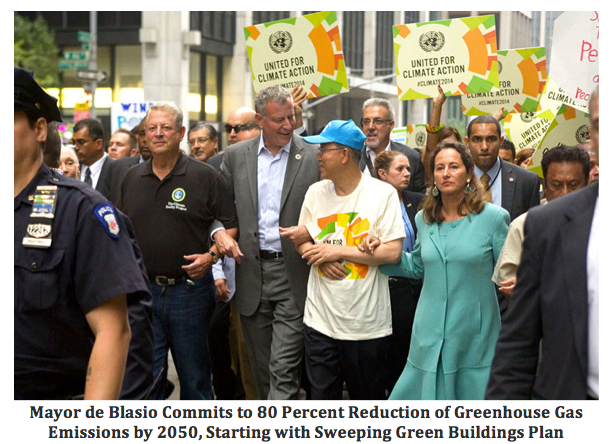
ME: NYPH is a non-profit local trade organization. We promote the Passive House standard in the metro area. Our goal is to build awareness about the Passive House standard. Passive House is one of the most effective ways of reducing carbon emissions. In New York City approximately 75% of carbon emissions comes from our buildings. Passive House design can reduce energy demand by as much as 90% in a building. So that makes renewable energy like solar power more accessible with only 10% of energy needed. This is important in New York City as the Mayor is promoting the 80 by 50 initiative to reduce emissions by 80% by the year 2050. The Mayor is aware of and supports Passive House strategies as one of the significant ways to achieve this goal.
Interview with Brian Foley of Serge Ferrari Fabrics
Serge Ferrari is the worldwide leader in exterior fabrics for exterior solar shades. To learn more I had the pleasure to interview Brian Foley, the Regional Manager of the Northeast, Unites States. Brian has been with Serge Ferrari for nine years.
NG: Can you tell me about Serge Ferrari – its history and what markets its serves?
BF: Ferrari Textiles, was founded by Serge Ferrari in 1974. Ferrari Textiles was rebranded to Serge Ferrari in 2012. Its cooperate headquarters and manufacturing facilities are located in La Tour du Pin, France. There are two additional manufacturing facilities in Switzerland. Serge Ferrari’s recycling facility, Texyloop, is in Italy as well as fourteen additional offices and stocking warehouses throughout the world, including Pompano Beach, Florida.
Serge Ferrari is a leader in the “flexible composite material” sector. Their corporate mission is to ensure a global offering to meet tomorrow’s major challenges, such as: sustainable construction, energy control, protection and renewal of resources.
Serge Ferrari is a vertically integrated company mastering all the production steps from product development to recycling, raw material formulation, process and mechanical engineering, spinning, formulation, coating and extrusion; logistics and recycling of end of life products.
The company offers solutions to the demands for countless markets with products designed for: acoustic solutions, composite building skins, solar protection, bio-climatic façade, breathable membranes, modular structures, visual communication, indoor & outdoor furniture, yachting protection, environmental protection and specialty membranes.
Interview with Somfy Systems, motorized shade experts
Somfy Systems is the world leader in motorized and automated shades for the window covering industry. They manufacture motors and intelligent systems for all types of blinds, shades, awnings and rolling shutters. Since motorization and automation are the driving force in engineered shading systems, it only makes sense to include such important content. My interview is with two of Somfy’s leading individuals with architectural and engineering experience: Russell Horowitz the Architectural Specification Manager in the Northeast and Ty Saville the Architectural/Engineering Market Specifications Manager.
NG: How did Somfy get involved selling shade motors?
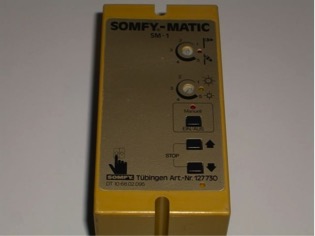
TS & RH: Somfy began in 1750 in a French valley that borders Switzerland manufacturing parts for Swiss watches. This region is where the Somfy name originates. Somfy is an acronym; it stands for Societe d’Outillage Mecanique du Faucigny that translates to Mechanical Tooling Company of Faucigny. By 1868, the company had expanded and now manufactured a wide range of products and components including fishing reels and rods. In 1969 a local awning and shutter manufacturer contacted various companies in the area looking for a solution to power their products. Somfy was the only company able to manufacture a prototype. This was the first step in a whole new direction for the company. In 1977 Somfy expanded to the United States. Manually retractable awnings were commonplace so motorization was a welcomed feature. Motorized projection screens and interior shades quickly followed. Somfy first touched on home automation in 1981 with the launch of the “Somfy-matic”, the first weather controlled awning and shutters, capable of sensing weather conditions and automatically adjusting awnings and shutters appropriately. Today we are helping to create smart homes and workplaces. Smartphones or tablets can remotely control Somfy products; additionally, our products integrate into popular home automation systems including Crestron, Honeywell, and AT&T.
The Passive House Summer Shade
The Passive House is designed to achieve maximum Solar Heat Gain by orienting its largest windows facing south in order to provide at least 50% of the heating demand. In the summer months shading of these windows is necessary and exterior shades and blinds are excellent solutions to balance out the energy needs for the Passive House.
Even though exterior shading solutions are preferred, they may not be possible for a variety of reasons, such as, “we never planned for exterior shades, now it’s too late”, or “we don’t have a budget for motorized shades”, or just simply “we don’t want exterior shades, we want interior shades”.
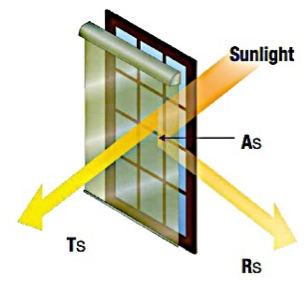
The challenge with interior shading solutions is to find a shade fabric that provides the best SHGC number. To understand how to do that, let’s look at how solar shade fabrics are measured for performance. The chart below explains how performance in measured by looking at three numbers: TS for transmittance – how much solar energy passes through, AS for absorbance – how much solar energy is absorbed and RS for reflectance – how much solar energy is reflected. These three numbers equal 100% of solar energy.
Interview with Jennifer Birkeland, Landscape Architect at West 8
Exterior shades are a significant consideration for the Landscape Architect. In order to learn more about this specialized discipline, I interviewed Jennifer Birkeland of West 8. West 8 is an award-winning international office for urban design and landscape architecture founded in 1987. Over the last 28 years West 8 has established itself as a leading practice with an international team of 70 architects, urban designers, landscape architects and industrial engineers. West 8 developed projects all over the world in places such as Copenhagen, London, Moscow, New York, Madrid, Toronto and Amsterdam.
NG: Who is West 8 and what is your role?
JB: West 8 is an international award winning multi-disciplinary design firm with offices in Rotterdam, New York, and Brussels. I am currently a project manager in the New York office.
NG: What are some of West 8’s most recognized projects?
JB: West 8 has a wide range of projects completed around the world. Each project has its own approach and identity. Some of our award winning projects includes, the redevelopment of Toronto’s Central Waterfront, New York’s Governors Island, Madrid RIO, Schouwburgplein in Rotterdam, and Miami Beach’s Soundscape Park.
Interview with Lois Arena, Passive House Consultant
at Steven Winter Associates
I recently had the pleasure to sit down with Lois Arena, the Senior Mechanical Engineer for Steven Winter Associates. She is one of the leading Passive House consultants in the country. Lois is the Passive House consultant on the world’s tallest and largest Passive House for Cornell’s new technical campus on Roosevelt Island.
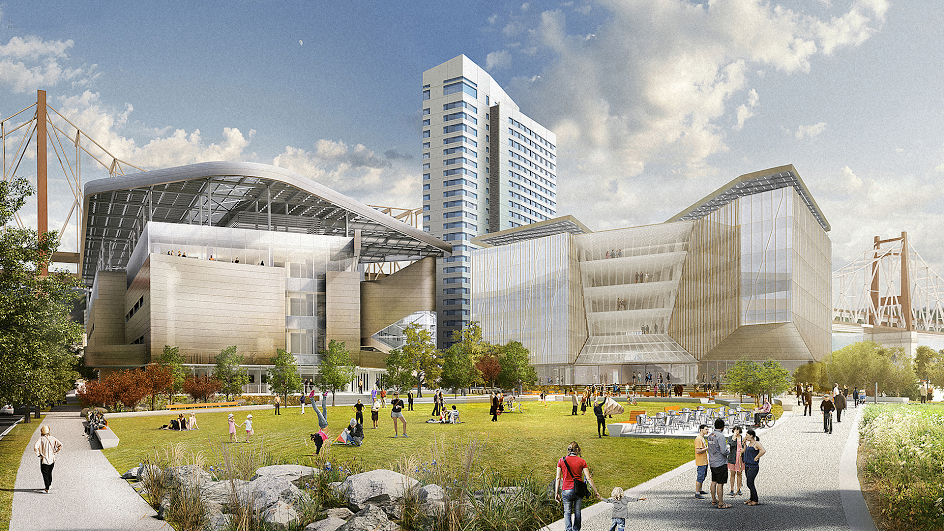 This 26-Story High-Rise Will Be The Biggest Passive Building In The World
We are excited to share our latest video focusing on the ZIP Skylight and ZIP Exterior Shade System. For more information on either product click read more below, or contact us today.
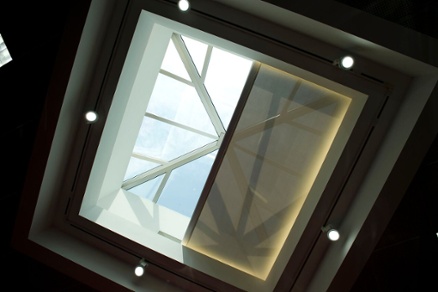
The ZIP Skylight shade is an industry breakthrough and a one of a kind shading solution. With the fabric locked in on either side, the skylight shade never sags all without any intermediate support bars or obstructions – even in very large openings. The ZIP Skylight shade can be used with either mesh or blackout fabrics. Read More
We are excited to share our newest Exterior Solar Shade videos on the Cable Guided Exterior Shade and Tension Force Exterior Shade. For more information on either product click read more below, or contact us today.
The gravity assisted cable guided exterior shade is elegantly designed and very versatile for both residential and commercial projects. It is available with side cables or side channels and can be integrated into the building facade. Read More